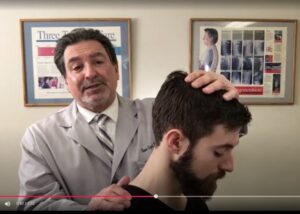
Neck Pain Frequently Asked Questions in Libertyville, IL
By Dr. Steve Segal, D.C. | Community Chiropractic Care, Libertyville, Illinois
Neck pain can be as simple as waking up unable to turn your head comfortably—or it can gradually build from hours at a computer, driving, exercise, an old injury, or everyday wear and tear.
Since 1989, I’ve helped people in Libertyville and surrounding Lake County communities with neck pain, stiffness, headaches, restricted motion, and other musculoskeletal problems.
One of the things I’ve learned is that people usually have many questions before deciding whether they need to see someone.
Here are answers to some of the neck pain questions I hear most often.
If you’re looking for information about how I evaluate and treat neck pain in my Libertyville office, visit my Neck Pain Relief in Libertyville page.
What are the most common causes of neck pain?
Neck pain can come from many different sources. Common contributors include:
Long periods sitting at a computer
Forward-head posture and frequent phone use
Muscle strain or spasm
Sleeping in an awkward position
Restricted movement in the neck or upper back
Sports and exercise injuries
Whiplash and other automobile injuries
Arthritis and age-related changes
Shoulder and upper-back problems that affect neck mechanics
Sometimes where you feel the pain isn’t necessarily where the problem began.
That’s one reason my examination doesn’t start and end with your neck. I look at posture, ranges of motion, muscle function and how the rest of your body is moving. I often begin at the feet and work upward.
Can poor posture really cause neck pain?
Posture can certainly contribute.
Your head weighs roughly as much as a bowling ball. When it remains forward of your shoulders for long periods, the muscles and joints of the neck and upper back have to work differently to support it.
That doesn’t mean everyone with imperfect posture will develop neck pain. Human beings aren’t statues, and there isn’t one “perfect” posture that everyone has to maintain all day.
What often matters more is whether you’re spending hours in one position without enough movement.
For many patients, small changes in desk setup, phone position, movement habits and simple exercises can make a meaningful difference.
How do I know whether my neck pain should be evaluated?
Consider having your neck evaluated when:
The pain isn’t improving
You repeatedly wake up with the same problem
You can’t turn your head normally
The pain keeps returning
Neck movement causes pain into your shoulder or arm
Your neck pain is associated with recurring headaches
The problem is interfering with sleep, driving, work, exercise or normal activities
You don’t necessarily need to wait until neck pain becomes severe before figuring out what’s causing it.
Are there neck pain symptoms that need medical attention right away?
Yes.
Most neck pain is musculoskeletal, but certain symptoms require prompt medical evaluation.
Seek urgent or emergency medical care for neck pain associated with symptoms such as sudden significant weakness, difficulty walking or coordinating your movements, serious trauma, fever with severe illness, or new neurological symptoms.
Sudden neck pain accompanied by an unusually severe headache, facial drooping, difficulty speaking, significant dizziness, or vision changes also warrants emergency evaluation.
When something doesn’t fit the pattern of an ordinary mechanical neck problem, chiropractic treatment shouldn’t simply proceed as usual. The first job is determining whether chiropractic care is appropriate at all.
Do I automatically need an X-ray or MRI for neck pain?
No.
Imaging can be extremely helpful when there is a clinical indication, but not every person with neck pain automatically needs an X-ray or MRI.
Your history and physical examination help determine whether imaging is appropriate.
If I find something during your examination that concerns me or suggests additional testing is warranted, I’ll tell you and help you determine the appropriate next step.
Can chiropractic care help neck pain?
For some types of mechanical neck pain, manual therapy—including spinal manipulation or mobilization—may be one part of conservative treatment.
Clinical guidelines for neck pain also include approaches such as exercise and movement-based care depending upon the type of neck problem and the individual patient.
That last part is important: not every neck problem is the same.
My goal isn’t simply to find a painful spot and adjust it. I want to understand what isn’t moving or functioning properly and what we can do to change it.
Will you adjust my neck on the first visit?
If I examine you and determine that an adjustment is safe and appropriate, I usually don’t see a reason to make you come back another day just to begin care.
My first visit generally includes:
A focused examination
An explanation of what I found
Your first adjustment, when appropriate
Two or three practical things you can do at home to continue healing beyond your visit.
There are circumstances when I will not adjust someone on the first visit. Your safety and what I find during the examination come first.
Does a chiropractic neck adjustment have to be forceful?
No.
There are different ways to mobilize and adjust the cervical spine.
The technique should fit the patient—not the other way around.
Your age, examination findings, comfort level, medical history, and the nature of your problem all matter when deciding what technique is appropriate.
If you’re nervous about having your neck treated, tell me. That’s a perfectly reasonable conversation to have before doing anything.
How many chiropractic visits will I need for neck pain?
There is no honest way to tell every person with neck pain that they need the same number of visits.
That’s why I practice visit by visit.
Many people with uncomplicated musculoskeletal problems know within the first few visits whether what we’re doing is helping.
I don’t require patients to purchase 12-, 24- or year-long treatment programs.
We’ll see how you respond.
When you’re doing well, you’re doing well.
What can I do at home for neck pain?
It depends on what’s causing your neck pain.
One person might benefit from changing a workstation. Another may need more movement during the day. Someone else may need a particular stretch, strengthening exercise or change in sleeping position.
That’s why I would rather give you two or three things chosen specifically for you instead of handing everyone the same generic sheet of neck exercises.
At your first visit, I’ll show you simple actions you can use between appointments when appropriate.
The objective is for healing to continue when you’re not in my office.
Can working at a computer or looking at my phone contribute to neck pain?
Absolutely.
The problem isn’t necessarily the computer or phone itself. It’s often the amount of uninterrupted time spent in one position.
A simple habit I frequently suggest is changing position before your neck tells you to.
Move around. Look away from the screen. Bring the phone toward you rather than continually bringing your head toward the phone.
Your body generally prefers movement to being frozen in one position.
Can neck problems contribute to headaches?
Yes, certain headaches can originate from or be influenced by structures in the neck.
These are often referred to as cervicogenic headaches. Muscle tension and restricted cervical movement can also accompany other kinds of headaches.
However, headaches have many possible causes, and a new, unusual, or severe headache should not automatically be assumed to be coming from the neck.
If your headaches occur along with neck stiffness or restricted movement, evaluating the neck may help determine whether a musculoskeletal component is present.
What makes your approach to neck pain different?
I have practiced in the local arear since 1989, and my philosophy is pretty simple:
Find out what’s wrong. Help you feel and move better. Give you things you can do yourself. Then see how you respond.
I don’t believe everyone needs the same treatment plan.
I don’t require long-term care packages.
And when it is safe and appropriate, I generally adjust patients’ care during their first visit rather than requiring them to return solely to begin treatment.
I also examine more than the area that hurts. Your feet, gait, posture, shoulders, upper back, and movement patterns can all provide clues about why your neck is being stressed.
How much does a first chiropractic visit cost?
For patients using our time-of-service option rather than insurance:
First visit: $97
That includes:
Examination
Explanation/report of findings
First adjustment when safe and appropriate
Simple home actions to help your progress continue
Follow-up visits: $63
I am also a Blue Cross Blue Shield PPO provider. If we file a claim with insurance, insurance billing requirements and customary fees apply.
If you’re not sure which option applies to you, text me, and we’ll help you figure it out before your appointment.
Can I text you with a question before making an appointment?
Yes—and texting is often the easiest way to reach me.
You don’t need to know whether chiropractic is the answer before contacting me.
If you have a question about your neck pain, send me a text. Tell me briefly what’s bothering you and how long it has been happening.
Text Dr. Steve Segal at 847-778-3627.
If I think you should be evaluated somewhere else first, I’ll tell you.
If it sounds like something I can help with, we’ll find a convenient time to take a look.
Looking for Neck Pain Relief in Libertyville?
If you’d like to learn more about how I evaluate and care for neck pain, visit my Neck Pain Relief in Libertyville page.
Or simply text me:
847-778-3627
Community Chiropractic Care
Dr. Steve Segal, D.C.
503 E. Park Avenue, Suite 1N
Libertyville, IL 60048
Straightforward, visit-by-visit chiropractic care since 1989.